
Kate Wells, Research Officer, Money and Mental Health; Chris Lees, Senior Research Officer, Money and Mental Health
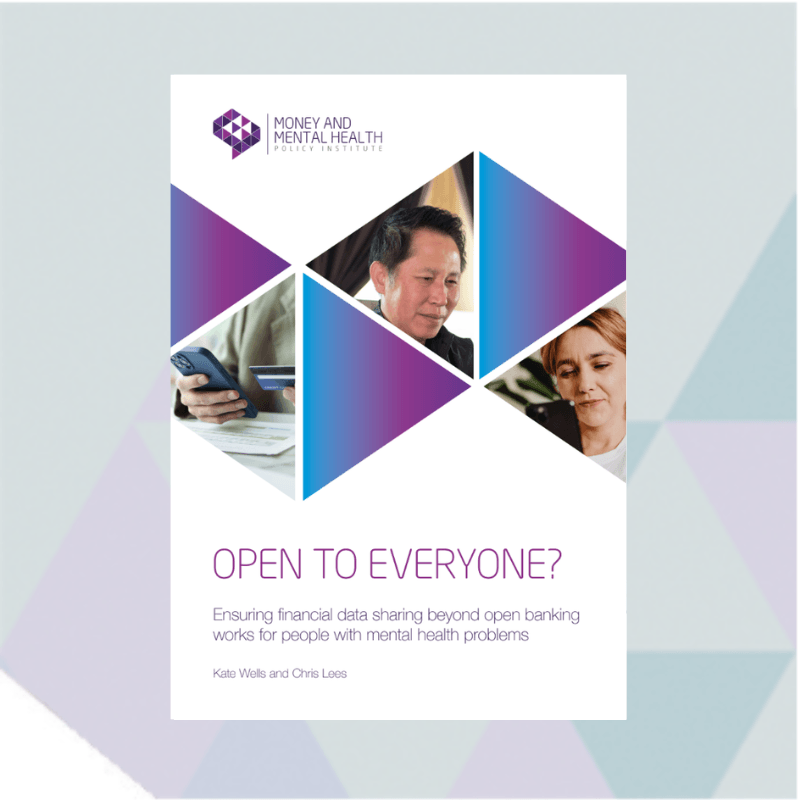
Open to everyone?
Ensuring the next phase of financial data sharing works for people with mental health problems
6 October 2026
Since 2018, open banking – which allows someone to securely share information from their current account or credit card with a trusted third party – has enabled millions of people to use budgeting apps, affordability checks and debt advice tools.
Our new report shows that this has had genuine benefits for many people with mental health problems, by helping them see their finances in one place and cutting down on the admin they have to keep up with.
But it isn’t working for everyone. Worries about security, data misuse and digital confidence mean some people with mental health problems are missing out on these benefits.
Many people with mental health problems told us transaction data feels deeply personal, revealing their daily lives, habits and moments of crisis. And while many people share this data out of necessity – for example, to access credit or debt advice – this can cause deep discomfort.
As open banking expands into open finance and Smart Data, there is a vital opportunity to address these issues and to ensure anyone with mental health problems can benefit from the developments. It’s important to get this right from the outset, rather than fixing problems later.
We’re calling on the government, regulators and industry to give people meaningful control over their data, stronger safeguards and clear routes to redress, while also ensuring that nobody is penalised for choosing not to share.
“Maybe I’m not the target user type, maybe I’m just too poor for these services to be of benefit. Lack of regulation, historically poor behaviour of financial industry, issues over internet security, dismissiveness of how critical every penny can be and how long it takes to fix issues, seems more gimmick than realistically useful.” – Expert by experience
Our key recommendations:
We want the government, regulators and industry to make sure financial data sharing develops in a way that works for people with mental health problems, by ensuring people have clear information, meaningful control and strong safeguards.
Our recommendations include:
- The Department for Business, Innovation, Science and Trade (BIST), the Financial Conduct Authority (FCA) and the Information Commissioner’s Office (ICO) should set out a clear consumer protection, accountability and redress framework for financial data sharing, with the Future Entity – the body set up to guide the next phase of open banking – delivering that framework and other Smart Data governance bodies putting it into practice.
- The FCA, BIST and the Competition and Markets Authority (CMA)should make sure people who choose not to share their financial data don’t face higher costs, poorer outcomes or reduced access to products and support as a result.
- The Treasury should provide the FCA with a clear statutory mandate for open finance, to ensure that it develops with clear oversight and common standards that align with open banking. With the Future Entity now being developed, there is an opportunity to ensure it is designed to be ready for open finance from the outset, rather than creating a separate system later. The Future Entity, the FCA and BIST should ensure that the customer journey is inclusively designed to help people understand information, make informed decision and remain in control.

This report was supported by the Aviva Foundation. It represents the research and views solely of the authors and of the Money and Mental Health Policy Institute.