
Elle Crossley, Senior Research and Policy Officer, Money and Mental Health; John Lee, Senior Research Officer, Money and Mental Health.
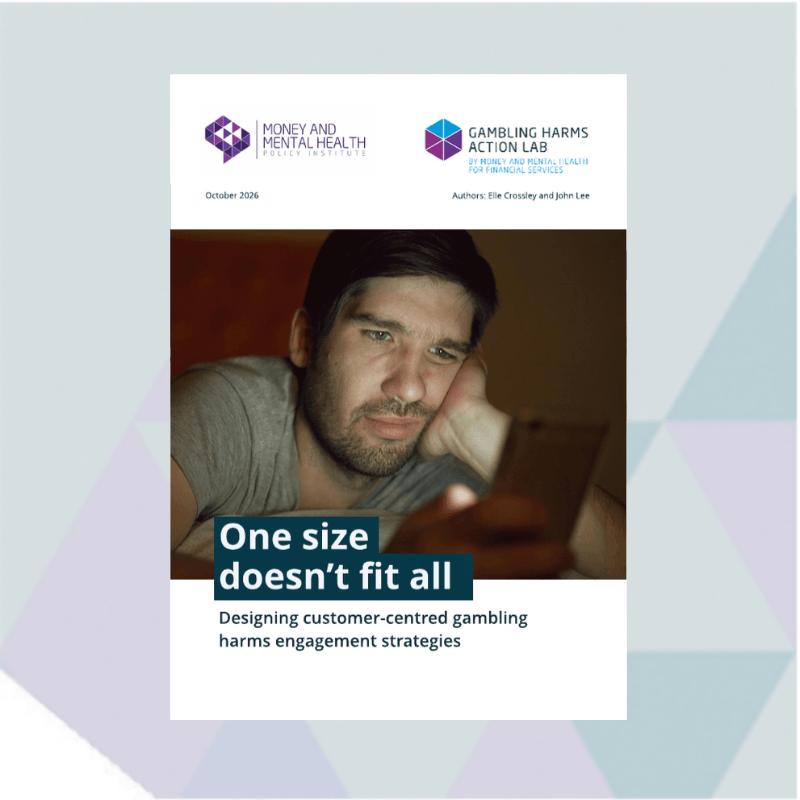
One size doesn’t fit all
Designing customer-centred gambling harms engagement strategies
22 October 2026
Nearly two-thirds (64%) of people experiencing problem gambling want to quit or reduce their gambling, according to GambleAware. Banks have an opportunity to support their customers, but not everyone will want or need the same kind of help.
This guidance is designed to help current account providers to consider the different stages a customer may go through when attempting to change their gambling, and the most effective ways to support them at each stage.
Banks can see patterns in customers’ spending that may signal potential gambling harm, including increases in payments to gambling operators, gambling late at night, chasing losses or gambling before paying essential bills. These insights can help inform timely, relevant support.
A Bank Gambling Block can be invaluable for customers who want to stop gambling, but others may prefer tools that help them better understand their spending or set limits on how much they gamble. Offering a range of options can help banks support customers with different goals and at different stages of readiness to change.
Behaviour change, however, is rarely straightforward, and wanting to change doesn’t always mean being ready to act. Banks can design communications and interventions that reflect different stages of readiness, helping customers explore their options and take steps towards the changes they want to make.
Through the Gambling Harms Action Lab, seven current account providers are working together to turn evidence and lived experience into practical interventions. By developing, testing, and evaluating approaches and sharing what they learn, firms can strengthen their strategies and improve customer outcomes.