
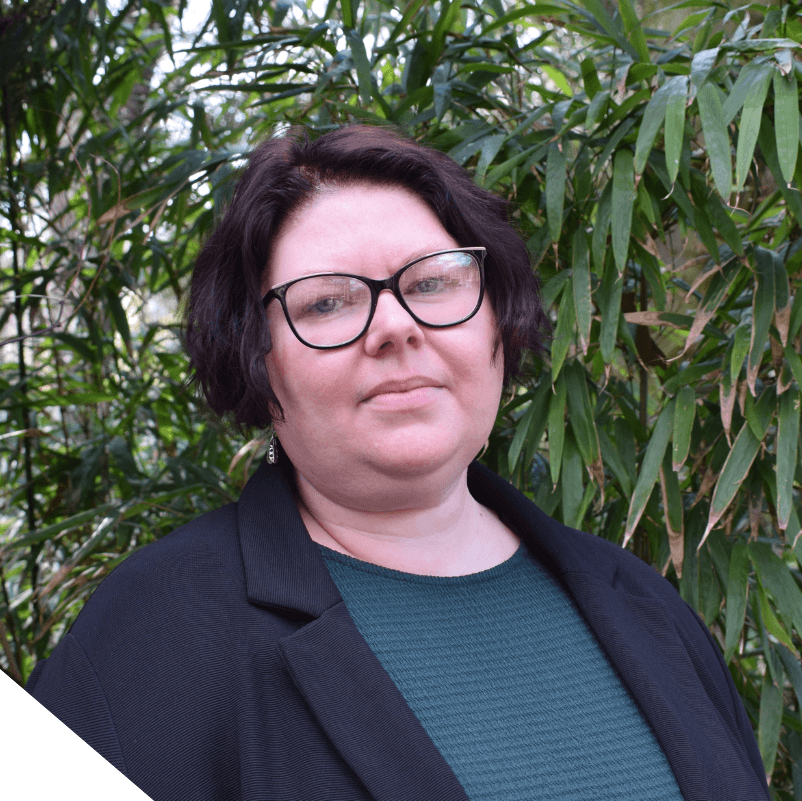

Kate Wells, Research Officer, Money and Mental Health
Open Banking: Who is it good for?
9 December 2025
- An upcoming area of focus for Money and Mental Health is Open Banking.
- Open Banking is a system of data-sharing between banks. It’s already an important source of insight, including on how to support people with their finances – but many people are still in the dark about if they’re using it or how it works.
- There are lessons to be drawn from how Open Banking is built and communicated about – including for other data-sharing systems that could benefit millions of people.
In a blog last year – “Can Sharing Lead to Caring?” – we set out our ambition to explore how data-sharing can be designed in a way that better supports people with mental health problems. The first phase of that work, looking at the sharing of support needs in essential services, has already highlighted how important it is to get consent and control right. Without them, trust is hard to build.
We’re now moving into the next phase of our project. This time we’re looking at how an existing data-sharing system – Open Banking – is working in practice, and what lessons it offers for future models like Open Finance and Smart Data.
What is Open Banking - and why it matters now
One of the key findings from our project so far is that getting consent and control right is essential if data-sharing systems are to support, rather than disadvantage, people with mental health problems.
Open Banking allows people to give permission for third-party providers to access their banking information or initiate payments. It’s the infrastructure behind many money-management and budgeting tools, affordability checks, payment journeys and support services that people are already using.
The potential is clear: better control, more accurate assessments, quicker access to support, and tools that reduce effort.
Recent conversations at the Open Banking Expo in October, where I spoke on a panel, underscored a reality we’ve heard elsewhere: while Open Banking can help reduce friction, many people still aren’t using it or don’t know they’re using it, and don’t understand what it means for their data.
There were some key themes that emerged at the Expo:
- Visibility and control matter. Many people want clearer, simpler ways to understand who has access to what.
- Momentum is building. With government and industry exploring new use cases, getting the design right now is critical.
- Availability is nothing without usability. Just because a service is available doesn’t automatically make it accessible especially for people with mental health problems.
For people with mental health problems, whose financial difficulties can compound symptoms; from cognitive overload, fluctuating energy, avoidance, or difficulties navigating complex systems, the way Open Banking tools are designed matters enormously.
Beyond Open Banking - towards Open Finance and Smart Data
Open Finance builds on the same technology but extends it to a wider set of financial products – from insurance to savings to pensions. In theory, this could help create:
- Fairer, more personalised products
- Help people access affordable lending that’s assessed on their real financial behaviour, not just a traditional credit file
- Enable tailored products and budgeting tools that adapt when someone’s circumstances or mental health problems fluctuate
- Allow people to see all of their financial information in one place
Beyond this, Smart Data will act similarly in other sectors such as energy and telecoms, allowing people to share data about their usage with third parties. This could, for example, help people find deals that best meet their circumstances. But these benefits will only be realised if future systems are designed with people with mental health problems and rooted in consent, inclusion and meaningful control from the start.
Alongside this, the groundwork for both Open Finance and wider Smart Data reforms is already being laid through emerging legislation and regulatory frameworks. These developments signal that data-sharing will play an increasingly central role across financial services and beyond, making it more important than ever to ensure that future systems are designed with inclusion, consent and control at their core.
Our big questions
These questions are at the heart of our work on data sharing and reflect how clarity, control and good design matter so deeply for people with mental health problems.
Here’s what we want to understand:
Are people with mental health problems benefitting from Open Banking, and do they even know it exists?
Where does it make managing money easier, and where does it create new confusion or risk?
What are the consent journeys like in real life, do people understand what they’re signing up to?
What lessons should be carried into the development of Open Finance and Smart Data?
How can these insights strengthen our current principles for future cross-sector data sharing?
What we’ve heard so far
From early scoping, expert conversations and the first wave of feedback from our Research Community, a group of 5,000 people with lived experience of mental health problems or caring for someone who does, a few themes stand out:
- Open Banking can help, especially where it removes repeated paperwork or provides quicker access to support.
- But awareness is mixed, and some people only realise they’ve used Open Banking after the fact.
- The biggest benefits are often seen by people already confident with digital tools.
- People want systems that reduce cognitive load – not add to it. Speed, clarity and predictability matter.
- Trust around data security is heightened when it comes to sensitive financial data.
These insights reinforce why careful design and clarity will be essential as the ecosystem grows.
How we’re exploring this
In this phase of the project we will review the evidence base and lessons from existing systems and tools and speak with experts across fintech, regulation, consumer support and tech. More broadly, we will analyse where Open Banking is working well – and where it isn’t; we will draw out implications and recommendations for future initiatives like Open Finance and Smart Data.
And, as with all of our research, we will put lived experience at its core, by engaging our Research Community, through a survey, focus group and our People’s Panel — a small group of around 20 Research Community members who take part in deeper discussions and help shape our thinking.
A call for input
This is a starting point, not a conclusion. If you have insights, use cases or views about how Open Banking, Open Finance or Smart Data could impact people with mental health problems, we’d love to hear from you as part of this phase.
Open Banking holds huge potential, but potential alone won’t deliver inclusion. We’re excited to explore more of what works, how it can work better for those who need it most, and where it isn’t yet delivering. We want to understand how it can be improved for the next innovation of financial data-sharing systems – and ultimately improve the financial wellbeing of people with mental health problems.
If you are interested in data sharing and want to offer your expertise, reach out to me at [email protected]. If you have lived experience of mental health problems and want to let us know what you think about data sharing, please consider joining our Research Community. And if you work in the sector and want to stay updated, sign up to our Professional Network.
This project is funded by the Aviva Foundation. The Foundation aims to support transformational changes in the financial resilience of those who need it most; helping people to prevent, prepare for, respond to and recover from, financial challenges.