
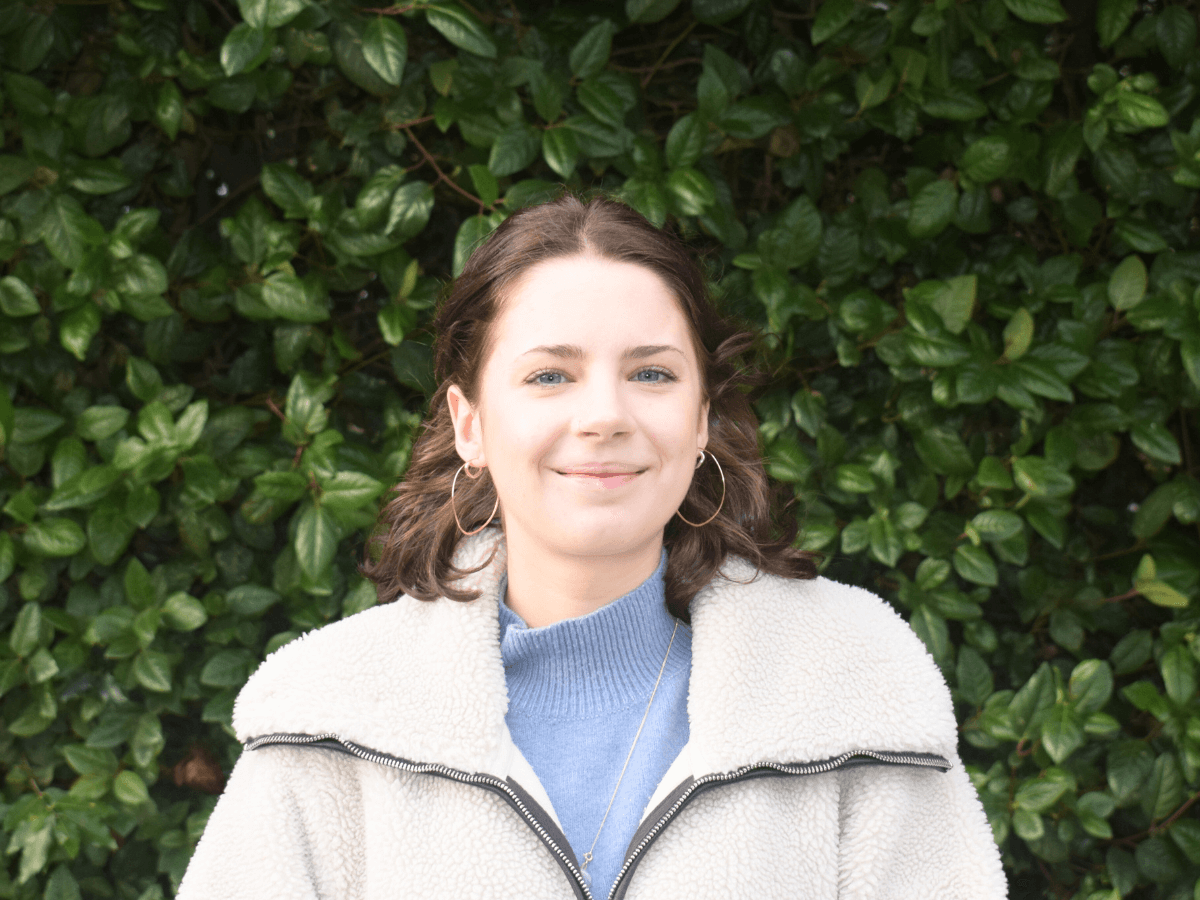

Elle Crossley, Senior Research Officer, Money and Mental Health
Introducing: Elle Crossley
11 February 2026
- Elle Crossley has recently joined Money and Mental Health as a Senior Research Officer in the charity’s Gambling Harms Action Lab team.
- With previous experience working in financial inclusion policymaking, combined with training in psychotherapeutic counselling, Elle believes Money and Mental Health is a great fit for her interests.
- Elle writes about the importance of rooting our work in people’s lived experience – and how vital this is given the shame and stigma still all too often associated with experiencing harm from gambling.
I am thrilled to be working at the Money and Mental Health Policy Institute as a Senior Research Officer in the Gambling Harms Action Lab. As soon as I saw the role I knew it was the perfect fit – bringing together my experience working in financial inclusion and my interest in mental health. I’m excited to contribute to the amazing impact that Money and Mental Health has already had in this space, and particularly within such a novel and innovative area as the Gambling Harms Action Lab.
My previous experience
At university I studied economics, where I had a strong albeit abstract desire to use my degree ‘for good’ – which, at the time, just meant avoiding going into finance. Economics has a reputation for its pessimistic outlook, referred to jokingly as the ‘dismal science’. But I found it fascinating for what it tells us about human behaviour and the way we make choices given a set of constraints.
After graduating and a brief stint in economics consulting, I worked at Fair4All Finance, a systems change organisation working to improve financial inclusion across the UK. My main focus was the HM Treasury No Interest Loan Scheme pilot, a UK-wide programme testing the social and economic benefits of giving small, short-term, zero interest loans to those who are otherwise unable to access credit. This taught me a great deal about the depth and scale of financial vulnerability in the UK, and the ways in which it is so often percieved as a personal failure rather than a failure of the system.
Training to be a counsellor
Alongside my work, I have been training as a psychotherapeutic counsellor for the past three years. Like so many in this field, I was initially motivated by my own experiences of therapy during a period of difficult mental health. I experienced first-hand the transformative power of having a safe space to explore my emotions, in an empathic and non-judgemental way, and I wanted to be able to create that space for others.
Through my training, I have worked with clients who have experienced substance use challenges, and I’m about to start working with clients who have experienced domestic abuse. While the work can be emotionally challenging, what I love about it is seeing the power of giving someone the space to express themselves fully.
Money and Mental Health
All of this brings me to the amazing research work of Money and Mental Health, which is grounded in the lived experience of people with mental health problems through the valuable insights offered by our 5,000-person Research Community. I feel very lucky to be working for an organisation that is elevating the voices of those who are so often made to feel disempowered and sidelined as a result of their mental health challenges.
My work at Money and Mental Health will focus on gambling harms and embedding these experiences in our work with financial services firms through the Gambling Harms Action Lab. The support need gap is vast: less than 3% of people at moderate risk of problem gambling have accessed specific gambling support services.
But shame and stigma remain a high barrier for those experiencing gambling harms from accessing support or speaking out, which points to the lasting effects of years of safer gambling campaigns which placed responsibility with the individual. Because of this, it’s crucial that we put lived experience at the heart of our work in the Gambling Harms Action Lab, to ensure that interventions land in a way that feels relevant and helpful, rather than reinforcing existing stigma. I feel honoured to be able to play a part in this.