

Zita Collier, External Affairs Intern, Money and Mental Health
Making third party access work: three priorities from our launch event
31 October 2025
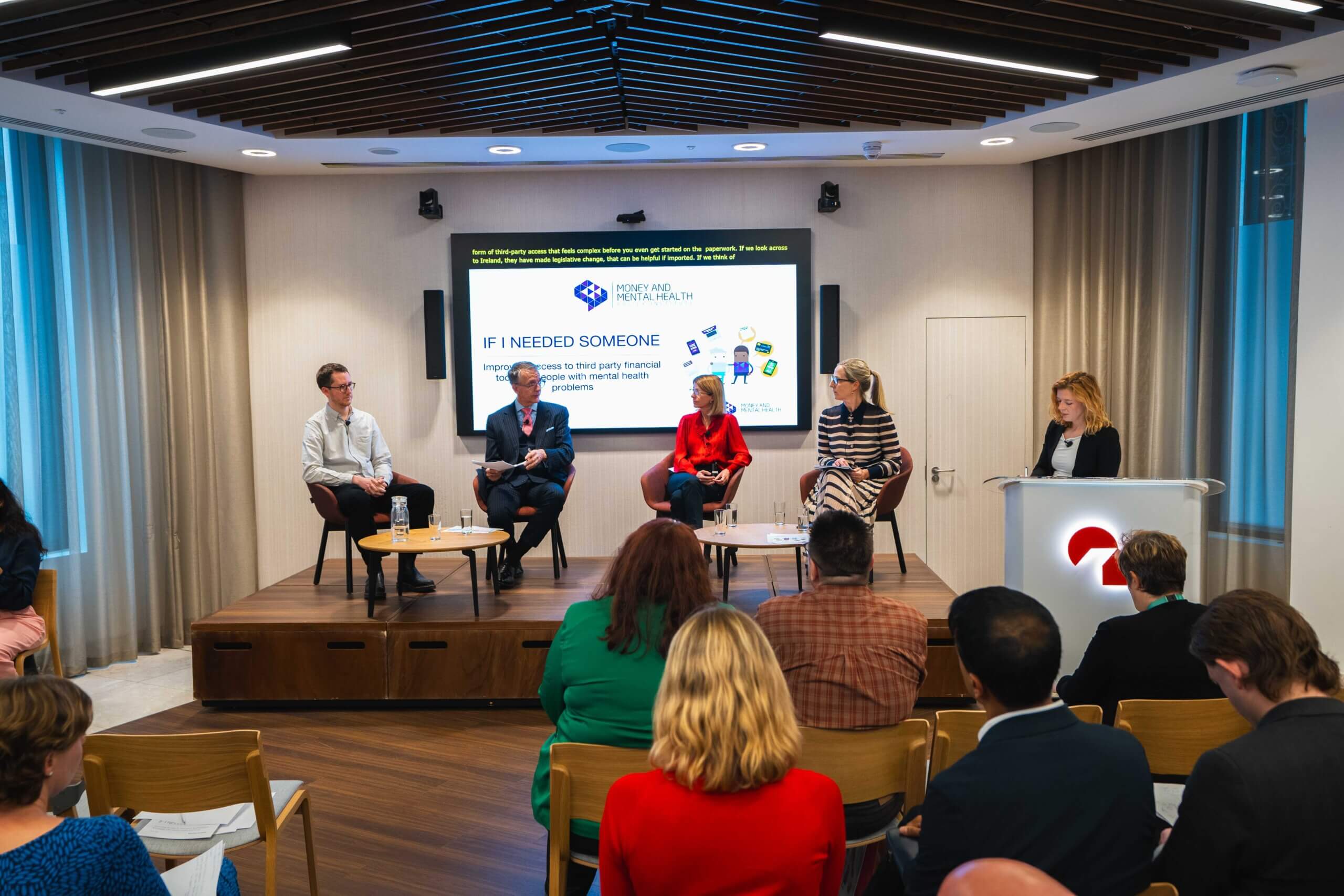
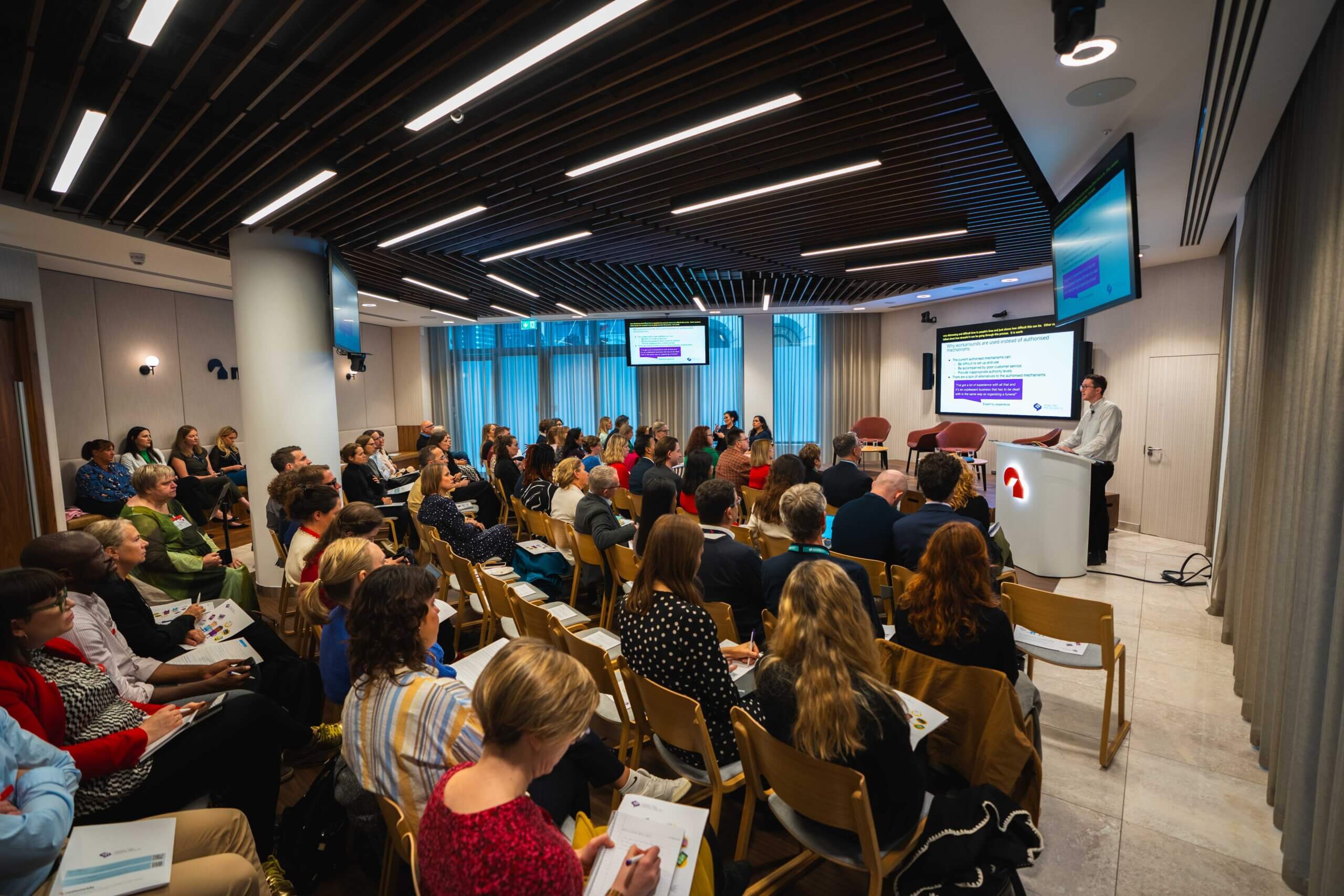
- Earlier this month, we launched our latest report If I needed someone with a panel event in central London.
- The report’s focus is on the need for tools enabling a trusted third party to support someone with their finances, so we brought together sector experts and experts by experience to discuss how to improve what’s available across the sector.
- This blog runs through some of the highlights and themes from that event, including designing effective third-party tools and services and reflections on previous sector-wide efforts.
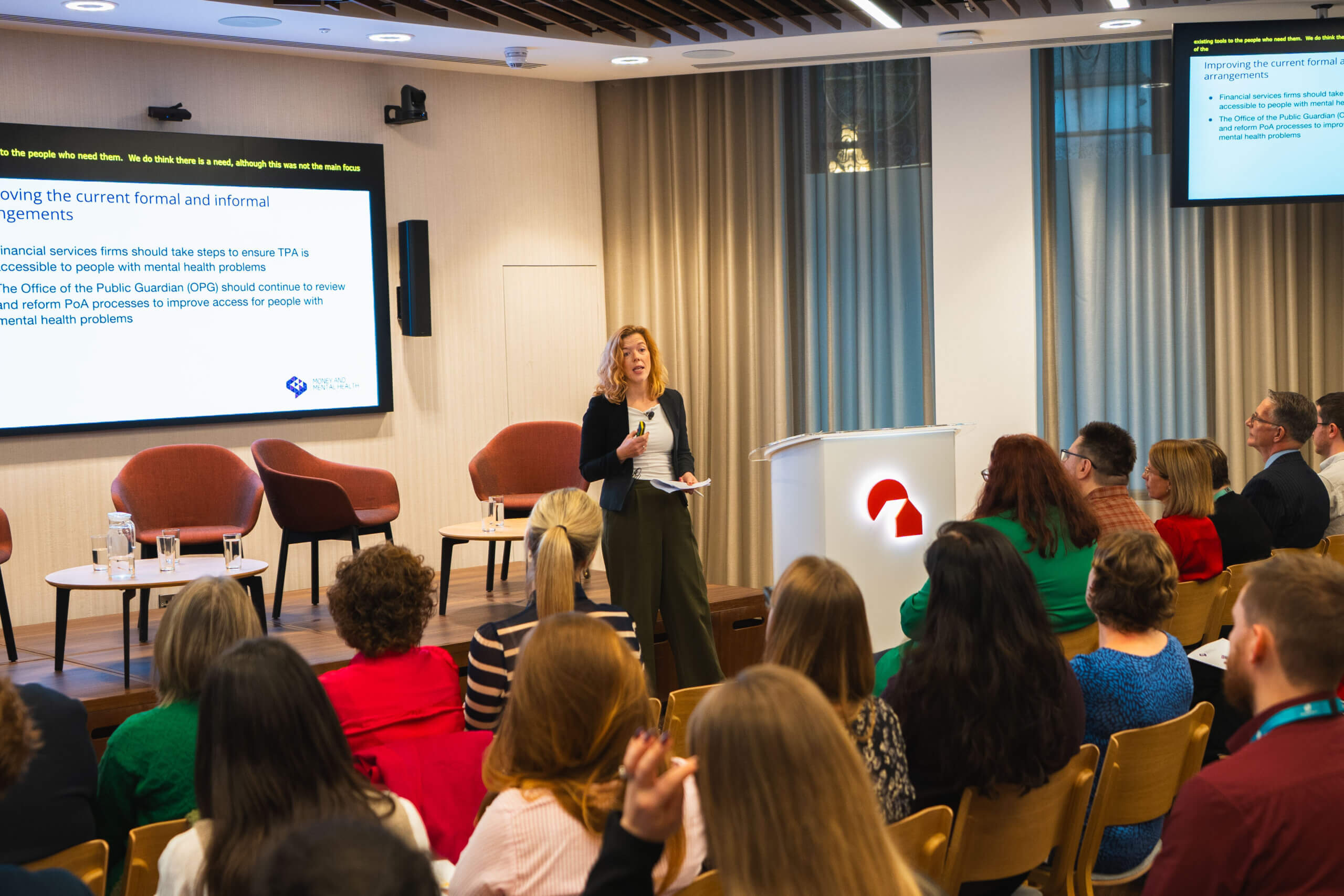
Money and Mental Health recently launched If I needed someone – research into how financial services and policymakers can reduce risk and remove barriers for people with mental health problems needing trusted support to manage their finances. The report was sponsored by Nationwide Building Society, and we were grateful to Nationwide for hosting our launch event. It brought together voices from across the mental health and banking sectors: our Chief Executive, Helen Undy; Chris Lees, who authored the research; our Research Community member, Anita, who kindly agreed to share some of her experiences; Nationwide’s Head of Vulnerability and Accessibility, Kathryn Townsend; UK Finance’s Eric Leenders; and Jayne Sibley, co-founder and CEO of Sibstar.
Three themes emerged from the discussion: shifting towards flexible, needs-driven tools; designing safe pathways that are clear, accessible and empathetic; and creating the conditions to scale change across the sector.
From ‘all or nothing’ to a flexible toolkit
Helen opened the event by posing the central challenge: how do you enable people to set controls when they’re well, so that they can safeguard their finances when they are less well?
Our expert by experience speaker Anita brought this to life through her own experience. She knows the financial warning signs when her mental health is deteriorating – missed payments, ignored correspondence, increased unnecessary spending – and recognises these patterns when she’s well. As Anita stressed, help needs to be set up in advance, not improvised in crisis. But at the moment the formal solution to these issues is Power of Attorney, which requires handing over complete control. For someone like Anita, who values independence, this feels disproportionate. A fluctuating condition shouldn’t mean permanently surrendering autonomy.
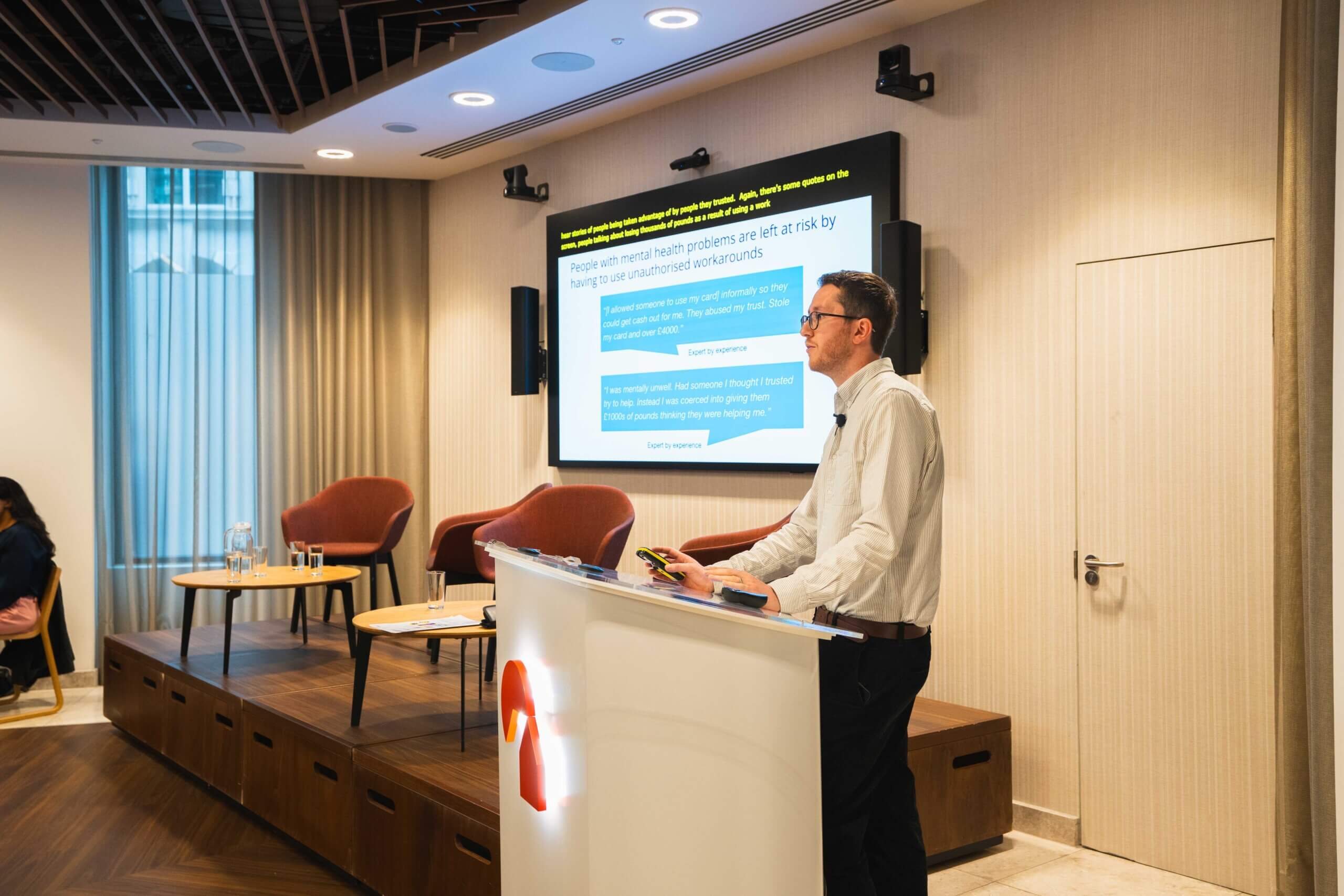
The lack of middle ground creates real risks. Many still need support from friends and family to manage everyday finances, but without alternatives they resort to workarounds. Chris presented a striking finding: that one in five people with a mental health problem have shared their PIN or online account details, leaving them vulnerable to financial abuse without the protections that formal mechanisms provide – trading safety for day-to-day support.
The consensus was clear: fluctuating conditions require flexible solutions. Kathryn emphasised that toolkits need to be an ‘and’, not an ‘or’ – a suite of options rather than a single, inflexible mechanism. That principle underpins the three tools we’re urging all banks to offer: carer’s cards, third party account notifications, and third party payment controls.
Making support obvious, easy and human
Even the best-designed tools can fail if people don’t know they exist or can’t access them. This emerged as a key theme of the discussion, with speakers highlighting current barriers and simple, practical solutions within reach.
The problem starts with visibility. Chris noted that information-processing difficulties are a common symptom of some mental health conditions, but information about support options remains hard to find. Anita described emotional barriers – embarrassment and the challenge of explaining how bad things might get. Helen emphasised that banks need to offer multiple access routes – webchat, online, phone – recognising how hard it is for many to talk to another person, especially while unwell. More fundamentally, as Anita stressed, banks need to actively advertise available help, so customers understand what protections exist and can plan ahead.
The encouraging counterpoint is that much of this represents what Eric described as a straightforward ‘day one’ fix. People simply need to know what’s available – through multiple channels, frontline staff training, and proactive promotion – which doesn’t require radical transformation. As Helen put it, “we need to make sure that we are getting the existing tools to the people that need them.” Kathryn added that banks don’t need to chase perfection here: progress can be incremental. She pointed to gambling blocks as a parallel: small, targeted interventions that gradually expanded into broader financial controls. Such bitesized improvements build momentum for change across the sector.
Joining the dots: what sector-wide change looks like
Ten years ago, banks collaborated to define a core set of services that should be available to anyone accessing banking. Basic bank accounts were born – products everyone could access, with agreed parameters around features and controls. The value was consistency: people knew that high street banks signing up to the scheme would offer the same basic standard.
“Ten years on,” Helen reflected, “I think technology has moved on, I think understanding of accessibility has moved on, and our understanding of what a core basic offer looks like needs to be updated.”
This isn’t about asking banks to invent something new. At least one major bank already offers at least one of the three tools we’re calling for. The question is when and how we ensure that they are available everywhere. We want the dots joined so that good practice isn’t provider dependent, and people aren’t forced to shop around or compromise on other banking features just to access tools that should be universal. What we’re calling for is a voluntary agreement between government and banks on this minimum toolkit, using the basic bank account model as a template.
The discussion also revealed broader opportunities for progress. Eric highlighted the growing role of technology, particularly AI, in improving customer service, echoing the earlier discussion about communication challenges. Responding to an audience question, the panel explored how joined up support could go beyond government-bank agreements to include local authorities and organisations that help when someone doesn’t have a trusted person.
The path forward
As Jayne pointed out, this isn’t a niche issue. Whether you experience a mental health problem yourself or support someone who does, the need for accessible financial tools affects a significant portion of the population. What’s needed is a universal standard that everyone can rely on.
That standard means a consistent, sector-wide offer, based on a voluntary agreement around a minimum toolkit and clearly communicated to all customers. Our launch event showed that there is appetite for change, practical solutions already exist, and sector-wide standards have an established precedent. What’s needed now is to bring these elements together to make support safer, more accessible, and genuinely fit for purpose.