

Lewis White, Research Officer, Money and Mental Health
More guardian angel than big brother? Our new research on transactions data analysis
4 November 2026
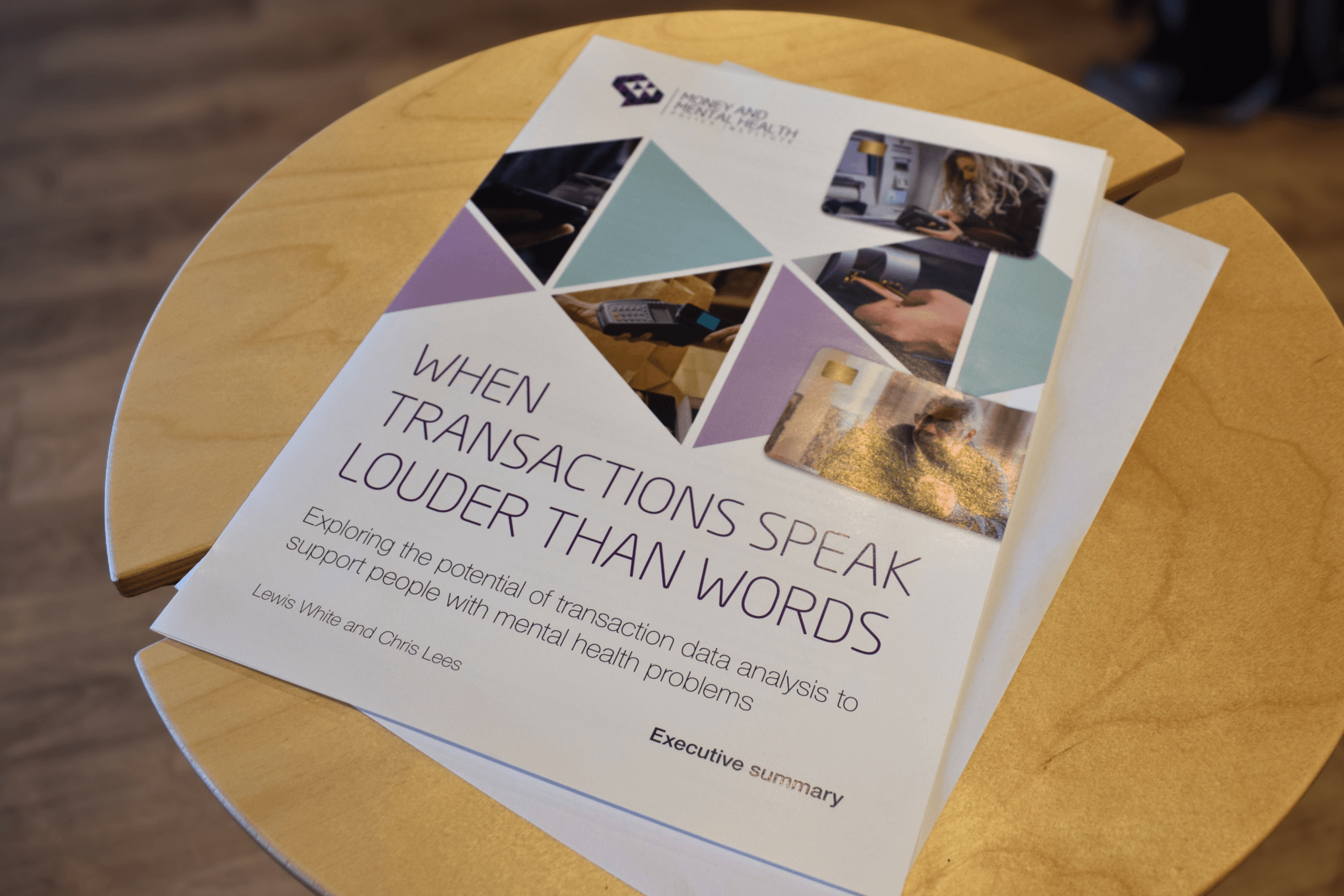
- Our new report, When transactions speak louder than words, looks at transaction data analysis and the role that banks could play in offering proactive support to people with mental health problems.
- We found that most Research Community respondents were generally in favour of banks using transaction data analysis in this way, but only when the right safeguards and support is in place.
- We are calling on banks to take steps towards using the transaction data they already have access to in order to help break the cycle of money and mental health problems.
- We also recommend that the Financial Conduct Authority should clarify how the Consumer Duty applies to banks using transaction data analysis to support customers with money and mental health problems.
For most of us, our finances are private and confidential. Unless we choose to let people in our lives know, there may be little indication on the surface that we are in trouble until it is too late. There is, however, an institution that could know what’s going on, even when we might not have reached out for support: our bank.
Banks have a privileged insight into their customers’ finances. Using transaction data analysis, they can spot sudden changes in income, spending and behaviour that could suggest a risk of financial difficulty during a period of poor mental health. Banks then have the potential to intervene once they spot these signs, and provide support before things start to spiral. This technology has been used for years in fraud detection, and has been applied more recently to offer proactive support for customers experiencing gambling harms.
Crucially — this does not mean banks diagnosing mental health problems. But they can make a difference by identifying customers at risk of financial difficulty, potentially during a period of poor mental health, and offering proactive support.
Our new report When transactions speak louder than words shows that people with mental health problems are generally in favour of banks using transaction data analysis in this way, but only when the right safeguards and support is in place.
How banks can use the data they have
We know that people with mental health problems are more likely to be in financial difficulty than those without mental health problems, and our research found that nearly nine in ten (88%) Research Community survey respondents said that their mental health problems had an impact on how they spend and manage money.
It is unsurprising then that almost two thirds (65%) respondents said that signs of this could be seen in their bank transactions, such as unusual credit card use, over or underpending, or missing payments.
While some of these may be good indicators of financial difficulty for any customer, whether they have mental health problems or not, others could more specifically be the result of a period of poor mental health. Banks have an opportunity to use this data to offer proactive, targeted support, as well as giving customers greater insight into their financial behaviour, particularly in a period of acute mental health problems.
What do people with mental health problems think of banks doing this?
Generally, the Research Community were positive about the idea that transaction data analysis could be used to provide targeted support for people with mental health problems in financial difficulty. Over six in ten (63%) said that they would support banks doing this to some extent.
However, a sizable minority (19%) opposed banks using transaction data in this way, citing concerns about trust, privacy and whether banks would offer meaningful support. Some felt it would be intrusive, controlling or a form of surveillance, potentially aggravating mental health conditions associated with paranoia or triggering past traumatic experiences of being controlled.
Between those who are favourable towards transaction data analysis and those who are opposed, there was a large group of respondents whose support was conditional on having protections put in place before being put into practice.
“When you are struggling with mental illness, you need all the help you can get. Having the bank keeping an eye on your account in this way can be a real help when you are beyond being able to do the job yourself. I feel transactional data analysis is more guardian angel than big brother.” Expert by experience
What needs to be in place?
Based on the feedback from our Research Community, we have put together the following set of key principles to ensure people with mental health problems feel safe with banks using transaction data analysis:
- Make it optional
- Be transparent about what data is being gathered, who it is shared with, and what the data could tell them
- Commit to transaction data analysis always being supportive, and never used solely for commercial purposes
- Ensure clear communication at all points in a support journey
- Maintain transparency and human oversight over AI use
More principles can be found in the full report, with an explanation of what each of them should look like in practice.
“I think I would feel better knowing that my bank was checking for [signs of financial difficulty as a result of a mental health problem], in the same way I am glad they check for scams. In this technology run age, the more help we can get the better.” Expert by experience
Our recommendations
With the cost of living crisis becoming the new normal for many people, and with mental health problems continuing to rise, banks have the opportunity to take action to support those who need it most. Therefore, we’ve outlined some key steps that should be taken to that end.
We recommend that banks should take steps towards using the transaction data they already have access to in order to help break the cycle of money and mental health problems. In practice, this should be optional, having strong data protections and directly involving lived experience in its development.
Regulators have an important role in this too. That’s why we’ve called on the Financial Conduct Authority to clarify how the Consumer Duty applies to banks using transaction data analysis to support customers with money and mental health problems, identifying and encouraging best practice across the sector.