
Chris Lees, Senior Research Officer, Money and Mental Health Policy Institute
If I needed someone
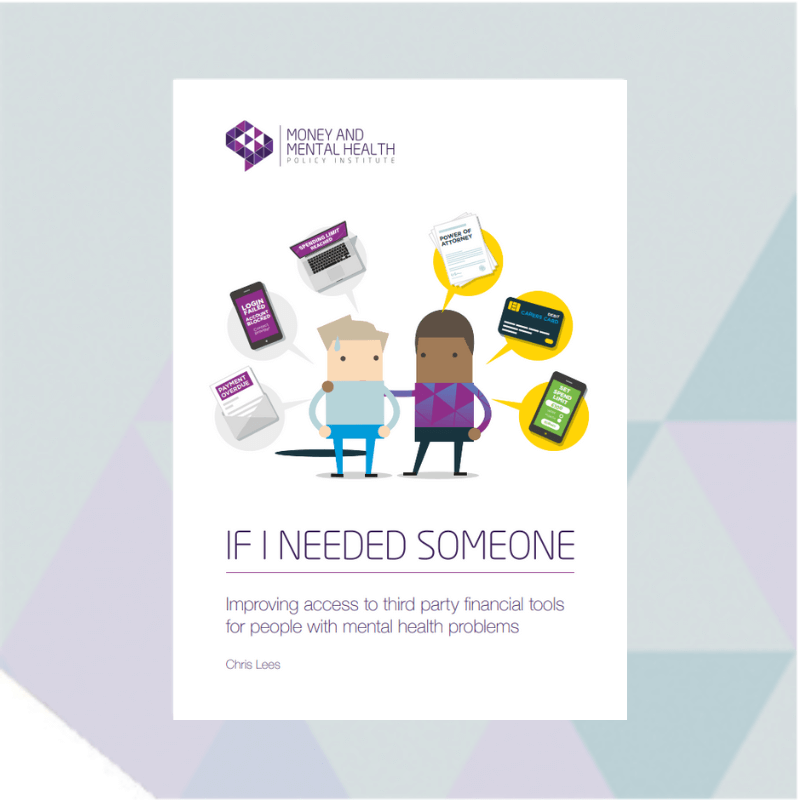
Improving access to third party financial tools for people with mental health problems.
This research explores how financial services and policymakers can make it safer and easier for people with mental health problems to get support from a trusted person to manage their finances.
Key findings include:
- Many people with mental health problems rely on friends or family to help them manage their everyday finances and spending. Common symptoms of mental health problems such as reduced memory, increased impulsivity or low mood can make it extremely difficult to manage financial admin and bills, or to go out shopping for essentials.
- However, formal tools for sharing financial decisions such as Power of Attorney (POA) are not working well for many people with health problems. Research participants said that POA is too complex to set up, and does not offer the right flexibility for someone with a fluctuating condition.
- The research also shows that financial services are failing to consistently offer informal tools for getting help from a trusted person to manage everyday finances, such as carers’ cards or third party notifications.
- As a result, one in five people with mental health problems have resorted to using risk workarounds to get support from a trusted third party, such as sharing their PIN or bank account details, leaving them at risk of financial abuse.
Our key recommendations
- The government should coordinate a voluntary agreement among financial services providers to offer a standard package of third party access tools. This should include features like carers’ cards, account notifications, and third party payment controls to provide a safe and legally protected way for people to get support with money management
- This should be a core part of the upcoming Financial Inclusion Strategy, modelling the agreement on the successful 2014 industry-wide commitment to basic bank accounts
- The government should also review the Power of Attorney system, to explore how it can be reformed to better meet the flexible, everyday support needs of people with fluctuating mental health conditions.

This report was sponsored by Nationwide Building Society. It represents the research and views solely of the authors and of the Money and Mental Health Policy Institute and does not represent the views or experiences of Nationwide Building Society.