
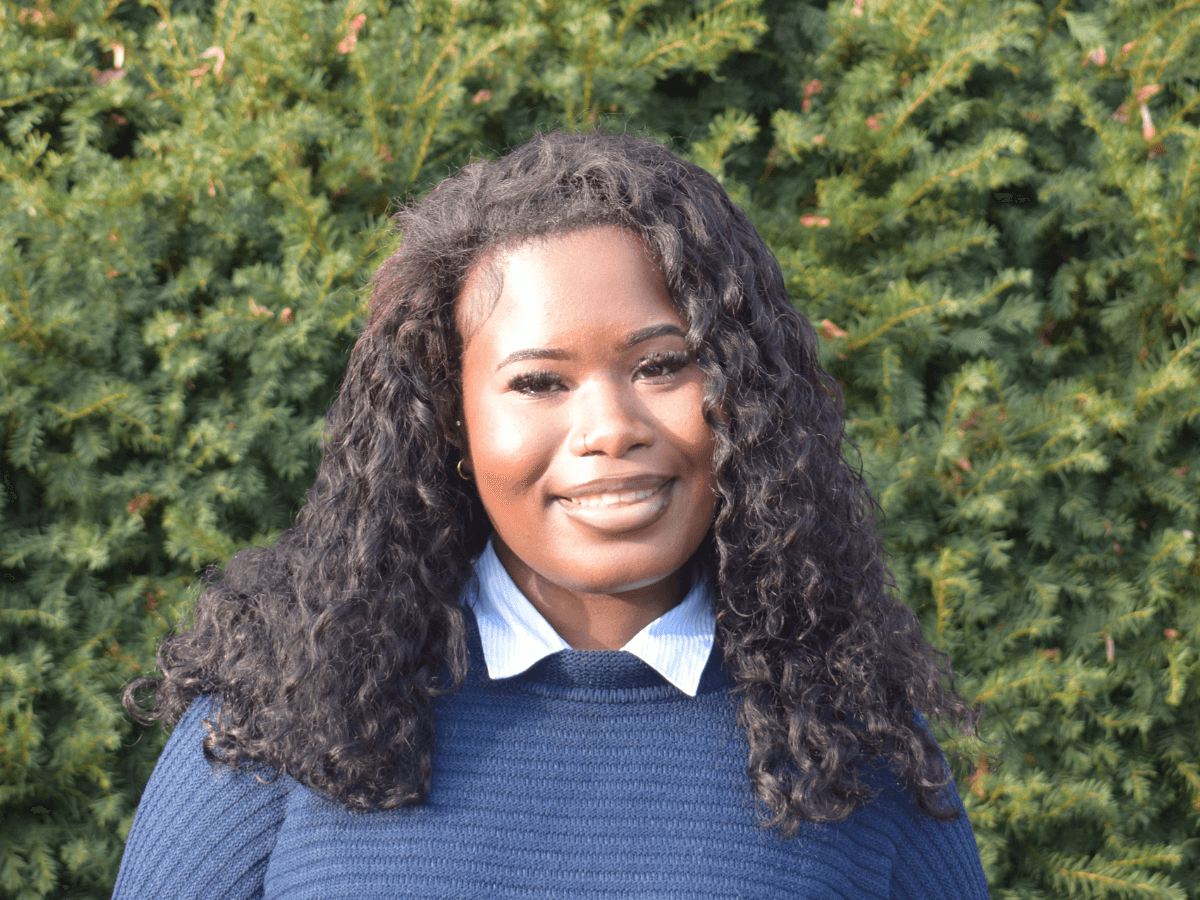

Sukai Secka, External Affairs Intern, Money and Mental Health
Introducing: Sukai Secka
16 February 2026
- Sukai has joined Money and Mental Health as its new External Affairs Intern, a role in which she’ll be contributing to our campaigning and communications work.
- In this introductory blog, Sukai writes about why mental health – and its link with financial systems – is personal.
- Drawing on her studies and other work experience, Sukai explains why the charity’s work and goals resonate with her experience.
For much of my life, mental health hasn’t been an abstract concept or a policy area; it’s been a daily reality shaped by responsibility, resilience, and systems all too rarely fit the people navigating them.
Why it matters
One of my parents lives with schizophrenia. When their mental health deteriorated, the practical responsibility of holding everything together fell to my other parent. They managed the bills, figured out the payments, dealt with institutions, and tried to maintain a sense of normality for our household while navigating systems that offered little flexibility or understanding. Mental illness affected our family, but financial pressure often determined how manageable that illness became, both for the person living with the condition and for those supporting them.
What stayed with me was how unforgiving financial systems can be in moments of crisis. Illness did not pause deadlines or expectations. Instead, stress compounded: letters, payments, eligibility rules, and barriers to access all became part of the landscape people had to navigate while unwell or supporting someone who was. The burden of crisis was emotional, but also financial and administrative – and it often fell hardest on those least equipped to manage it.
Growing up, I came to understand that money is not just about income. It is about stability, dignity, and the ability to plan beyond survival. When financial pressure increases, standards of living decline quickly, and opportunities narrow. This has consequences for social mobility that are rarely acknowledged. Without access to fair, flexible financial support, people with mental health problems, and those supporting them, are pushed into reactive cycles where crisis management replaces long-term security.
How my experience fits
This understanding has deepened through my work as a volunteer with The Kintsugi Way, a charity supporting survivors of domestic violence and sexual abuse. Working there, I saw how closely mental health, financial control and vulnerability can intersect. Many survivors were navigating trauma alongside anxiety, depression, or other mental health challenges, often while facing economic abuse, housing insecurity or debt. For people with lived experience, financial dependence and rigid systems frequently compounded harm, making recovery and independence harder to achieve.
What’s become clear to me is that lived experience is not peripheral to policymaking; it is essential to it. I’ve seen how gaps in policy translate into harm, and how small design choices can have enormous consequences for people at their most vulnerable.
My academic journey has helped me connect these experiences to wider structures. Studying Politics at undergraduate level, and International Studies and Diplomacy at postgraduate level, gave me the tools to analyse how governance and policy design can shape our everyday lives. I became particularly interested in how lasting and impactful change often has to come from below, from lived experience and frontline insight into the institutions that set the rules. Good policy doesn’t arrive from nowhere; it responds to what is happening on the ground, in people’s daily lives.
Bringing it all together
Money and Mental Health brings these strands together in a way that feels both necessary and distinctive. Its work recognises that financial insecurity is not simply a background issue for people with mental health problems, but a driver of distress and inequality. By centring lived experience and translating it into evidence and recommendations, the charity challenges systems that too often prioritise efficiency over humanity.
I joined Money and Mental Health because I believe financial security and good mental wellbeing should be a foundation, not a privilege. I’m excited to contribute to work that improves how financial systems respond to people with lived experience of mental health problems. I’m looking forward to supporting our campaigning work to help create fairer, more supportive systems that improve everyday realities.