


Martin Lewis CBE, Chair and Founder, Money and Mental Health
10 years of Money and Mental Health – and what we’ll do next
25 July 2026
- Money and Mental Health is now 10 years old!
- The charity’s chair and founder, Martin Lewis, reflects on what it’s achieved so far and the policy areas we hope to achieve change on next.
- This post is an abridged version of Martin’s speech at an event we held to mark our 10th anniversary.
Money and mental health problems are a marriage made in hell.
You are 3.5 times more likely to be in crisis debt if you have mental health problems than anybody else.
These two cannot be separated.
The clinical treatment time for depression is exacerbated if you have financial problems as well.
Highlights from the last 10 years
I only have 5 minutes to speak, though I am chair, I might go a little bit longer.
So I can’t run through my list of the favourite things that Money and Mental Health has done since it started.
I can’t tell you we managed to end GP charges for the debt and mental health evidence form.
I can’t tell you that we secured Breathing Space debt respite for people in NHS crisis care.
I won’t mention that we managed to change the decades-old rule that mandated banks to send threatening letters when people were in debt rather than signposting them to help.
I can’t mention that we managed to get – along with Money Saving Expert and others – banning scam adverts in the Online Safety Act. It’s still not being implemented 4 years later, still absolutely rife, still devastating lives, but we’re working on that one too. I hope to see the implementation by the end of next year.
And I can’t tell you that we managed – this year – to get the government to agree to change the hideous, nastiest form of debt collection that is out there, which is council tax.
What’s next? - Bailiff regulation
What I want to prioritise is the stuff we want to happen next.
The stuff that all of you who are opinion formers and in positions of power in this room, we want your help to make it happen; to make a manifest change to the millions of people out there who – whether temporarily or permanently – suffer mental health problems and the huge impact it has on their finances.
Independent bailiff regulation is absolutely crucial.
For council tax alone, they send the bailiffs in 1.7 million times a year.
These people go into your house, they knock on your door, they can be bullying, they can be threatening – not all of them, not all bailiffs are bad – but the way it operates is an absolute nightmare and decimates people’s mental health.
Three-quarters of people affected have mental health problems.
The government consulted a year ago on independent bailiff recommendations.
And it was dropped from the King’s Speech this year. Who are we here to protect?

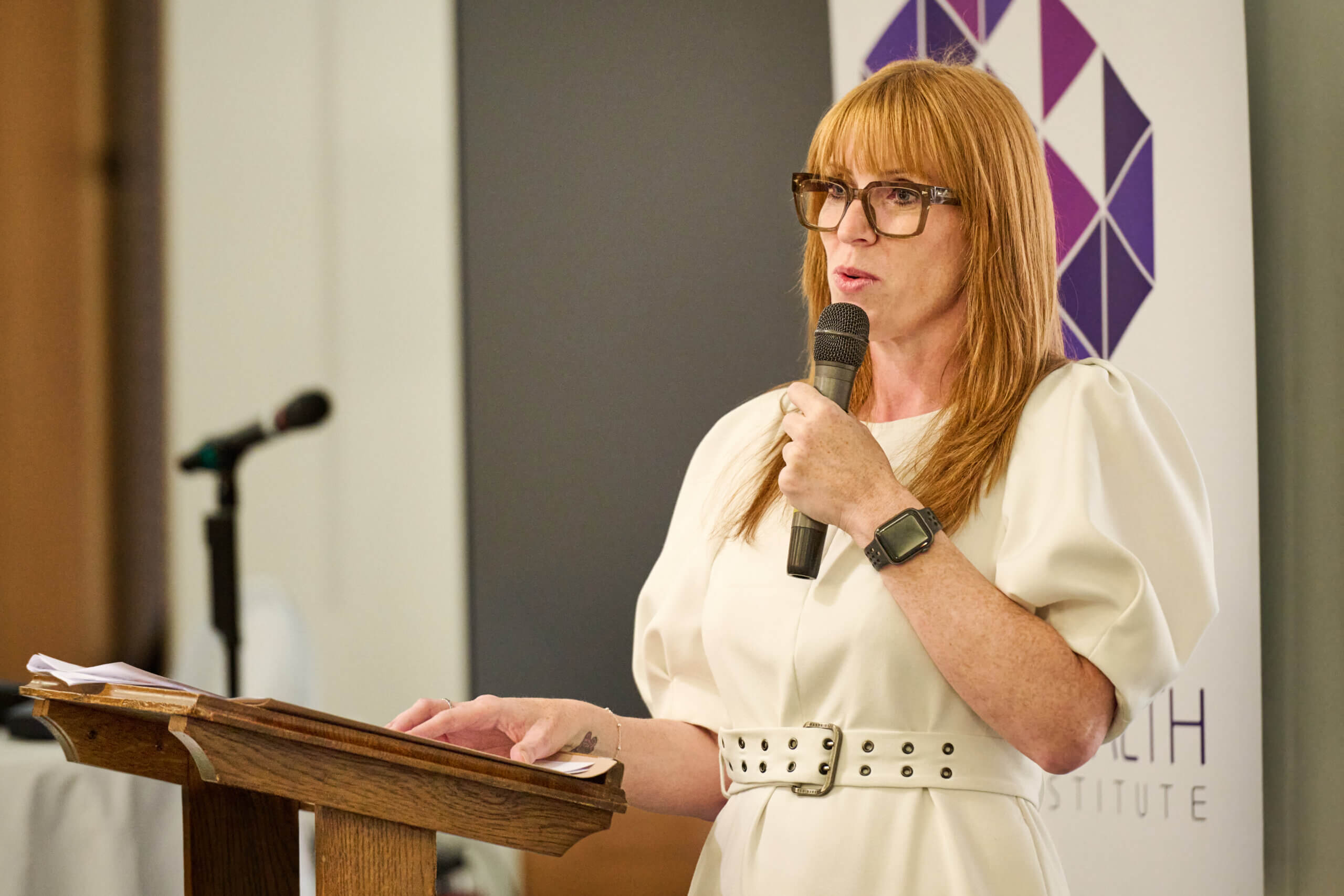



Images above feature: Martin Lewis CBE, Founder and Chair of Money and Mental Health; Helen Undy OBE, Chief Executive of Money and Mental Health; Angela Rayner, MP for Ashton-under-Lyne; Nikhil Rathi, Chief Executive of the Financial Conduct Authority.
Fair insurance
Someone with severe bipolar, if they can get cover, can pay 27 times more than anybody else to get their travel insurance policy.
I do not believe the risk is 27 times higher that they are going to claim.
We cannot get the figures without help from government and regulators to interrogate – is it a justified price rise, 27 times at the highest level? I don’t believe it is.
Joined up services and neighbourhood health
We need to join up mental health and money advice.
This has been one of our earliest policies when we had so many brilliant people who work in the mental health sector who said to us, “well, actually it’s funny, I’m a consultant psychiatrist, but I spend half my time filling out debt forms for my clients.”
What a waste of money. These hugely highly trained people, these brilliantly educated people, who should be helping with mental health, are spending 50% of their resources filling in debt forms, which could be done with support with access by Citizens Advice and other consumer health services.
So what do you do in your new neighbourhood health centres? Let’s embed money and debt counsellors there, so the system can be joined up, so when people are asking for help, they can get help.
And it was in the plan, but it’s not in the guidance. And that needs to change.
Let’s collaborate
Money and Mental Health is a brilliant organisation.
For those of you who are opinion formers and politicians, they have amazing research. If you’re doing something that links to them, reach out.
We will try to provide the data that you need to prove the case as long as it will help people – and we would love you to be in touch.